prosthetic
Dentures
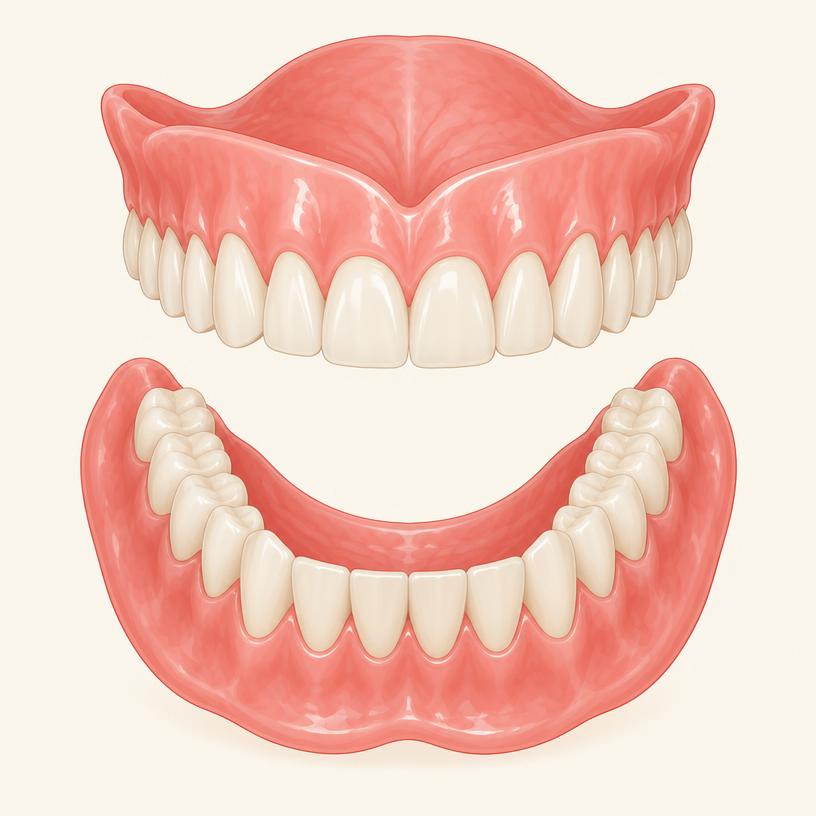
Dentures are removable replacements for missing teeth — full dentures for a whole arch, partial dentures when some natural teeth remain.
Draft guide — written with AI assistance and pending review by a licensed dental professional. It is general information, not dental advice.
Who it's for
People who have lost several or all of their teeth. Implant-supported dentures are an option for better stability.
How it goes
- 1Impressions and measurements of your mouth
- 2Any remaining hopeless teeth are removed if needed
- 3Try-in appointments to check fit and appearance
- 4Final fitting and adjustments
Recovery: An adjustment period of a few weeks is normal: extra saliva, minor sore spots, and practice needed for speech and eating. Return for adjustments rather than tolerating sore spots.
What's included?
A treatment total is usually several line items added together. This is why two quotes for “the same” treatment can differ. Not every component below is required for every patient — your plan should list only what your case needs.
Exam and impressions D0150
Always part of this treatmentMeasurements and molds of your mouth.
Complete denture (one arch) D5110
Always part of this treatmentA full set of replacement teeth for the upper or lower jaw.
Extractions of remaining teeth D7140
Only if your case needs itIf hopeless teeth must be removed first, each is billed separately.
Adjustments and relines D5730
Commonly includedFollow-up fitting tweaks. Some offices include early adjustments; relines are usually separate.
Why prices differ
- Full vs. partial denture
- Immediate vs. conventional
- Extractions and later relines
Questions to ask your dentist
- “Are adjustments and relines in the first year included?”
- “Is this an immediate denture, and will I need a second one?”
- “Can implants stabilize it later?”
Insurance tips
Usually a major service at about 50% with a 5–8 year replacement limit. MassHealth covers dentures for eligible adults.