surgical
Extractions
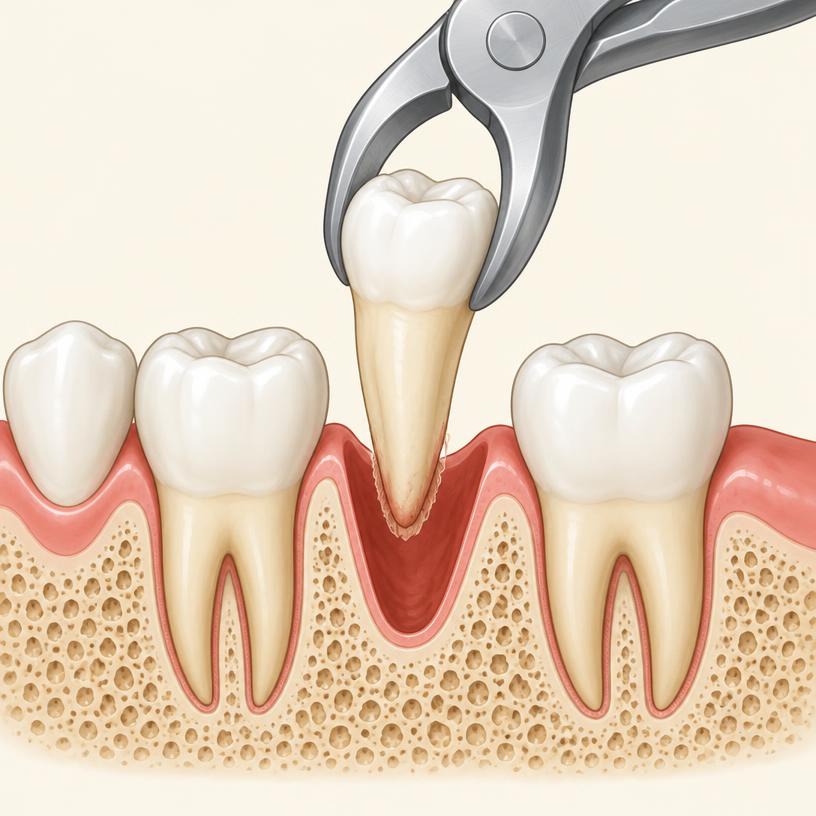
An extraction removes a tooth that cannot be saved or is causing problems, such as severe decay, infection, crowding, or troublesome wisdom teeth.
Draft guide — written with AI assistance and pending review by a licensed dental professional. It is general information, not dental advice.
Who it's for
People with teeth damaged beyond repair, advanced gum disease, or impacted wisdom teeth. Your dentist should discuss replacement options for the gap.
How it goes
- 1The area is numbed; sedation may be an option for anxious patients
- 2The tooth is loosened and removed
- 3The socket is cleaned; stitches may be placed
- 4You bite on gauze to help a clot form
Recovery: Plan for a quiet day. Swelling and soreness peak around day two or three. Avoid straws, smoking and vigorous rinsing while the clot heals, and follow the office's aftercare instructions.
What's included?
A treatment total is usually several line items added together. This is why two quotes for “the same” treatment can differ. Not every component below is required for every patient — your plan should list only what your case needs.
Exam and X-ray D0140
Always part of this treatmentAssessment of the tooth and surrounding bone.
Simple extraction D7140
Always part of this treatmentRemoval of a visible, non-impacted tooth.
Surgical extraction D7210
Only if your case needs itRequired when the tooth is broken at the gumline or must be sectioned. Costs more than a simple extraction.
Sedation D9243
OptionalIV or oral sedation for anxious patients or difficult cases. Optional and often not covered by insurance.
Why prices differ
- Simple vs. surgical removal
- Impacted wisdom teeth
- Sedation or IV anesthesia
Questions to ask your dentist
- “Is this a simple or surgical extraction?”
- “Is sedation billed separately?”
- “What are my options for replacing the tooth, and their cost?”
Insurance tips
Simple extractions are often covered at 80%; surgical and wisdom-tooth removal may be 50–80%. Some medical plans cover hospital-based oral surgery.