restorative
Fillings
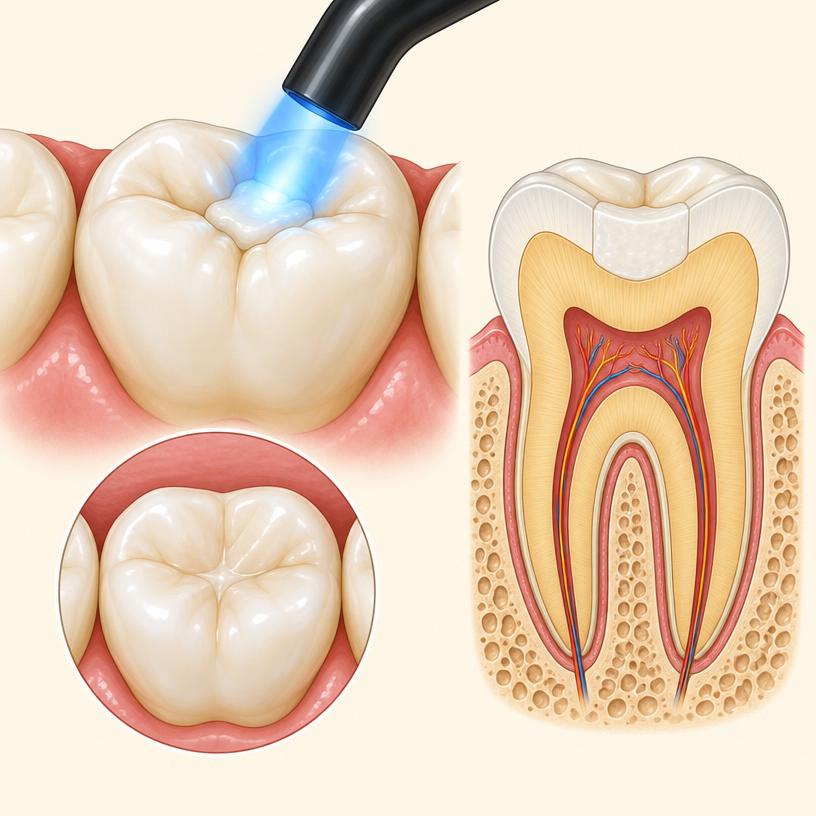
A filling repairs a tooth damaged by decay. The dentist removes the decayed area and fills the space with a tooth-colored composite or other material.
Draft guide — written with AI assistance and pending review by a licensed dental professional. It is general information, not dental advice.
Who it's for
Anyone with a cavity, a chipped tooth, or a worn or leaking old filling. Small cavities caught early mean smaller, cheaper fillings.
How it goes
- 1The area is numbed with local anesthetic
- 2Decayed or damaged tooth structure is removed
- 3The space is cleaned and filled with the chosen material
- 4The filling is shaped and your bite is checked
Recovery: Numbness wears off in a few hours. Mild sensitivity to cold or pressure for a few days is common; call the office if your bite feels high or pain persists.
What's included?
A treatment total is usually several line items added together. This is why two quotes for “the same” treatment can differ. Not every component below is required for every patient — your plan should list only what your case needs.
Exam D0120
Commonly includedThe check that identifies the cavity, sometimes billed separately.
X-ray D0220
Commonly includedA single image of the tooth to see the extent of decay.
Composite filling (1 surface) D2391
Always part of this treatmentA tooth-colored filling on one surface of a back tooth. Price rises with each additional surface.
Local anesthetic D9215
Only if your case needs itNumbing for the procedure. Often included in the fee, sometimes listed separately.
Why prices differ
- Number of tooth surfaces involved
- Front vs. back tooth
- Tooth-colored composite vs. silver amalgam
Questions to ask your dentist
- “How many surfaces does each filling involve?”
- “Will my plan pay the composite rate on back teeth, or downgrade it?”
- “Is this decay urgent or can it be watched?”
Insurance tips
Usually covered around 80% after the deductible. Many plans 'downgrade' white fillings on back teeth to the silver rate — you pay the difference.