gum care
Periodontal Treatment
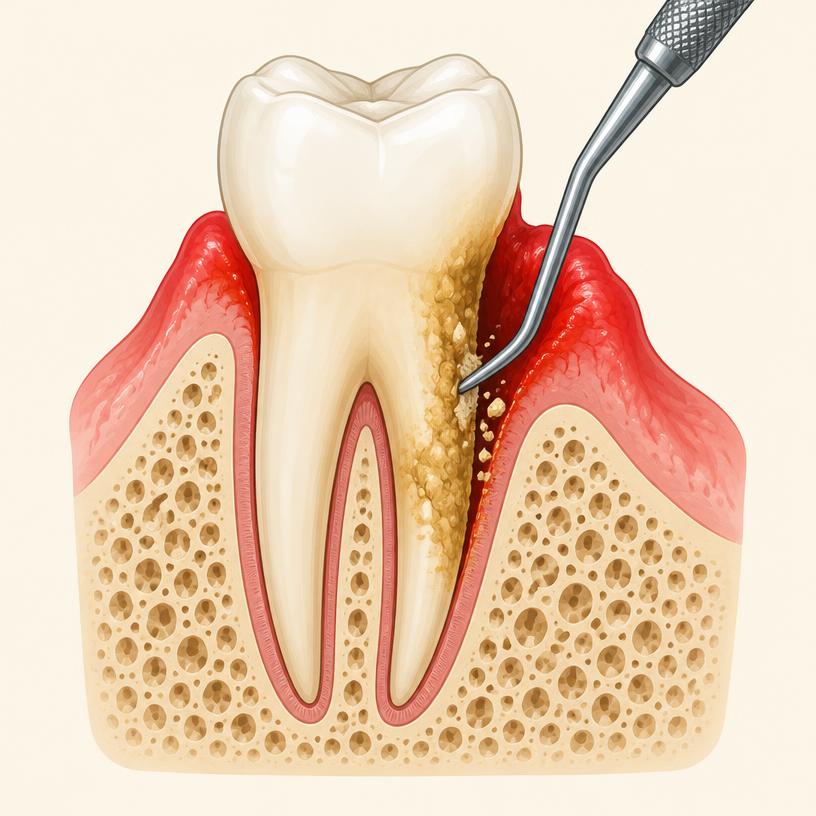
Treatment for gum disease ranges from deep cleaning below the gumline (scaling and root planing) to surgery for advanced cases. The goal is to stop bone loss and keep your teeth.
Draft guide — written with AI assistance and pending review by a licensed dental professional. It is general information, not dental advice.
Who it's for
People with bleeding gums, deep pockets around teeth, or bone loss seen on X-rays. Smoking and diabetes increase risk.
How it goes
- 1Measurements of the pockets around each tooth
- 2Deep cleaning below the gumline, usually numbed and split into visits
- 3Re-evaluation after healing
- 4Ongoing maintenance cleanings every 3–4 months
Recovery: Tenderness and sensitivity for a few days after deep cleaning. Long-term success depends heavily on home care and maintenance visits.
What's included?
A treatment total is usually several line items added together. This is why two quotes for “the same” treatment can differ. Not every component below is required for every patient — your plan should list only what your case needs.
Periodontal charting D0180
Always part of this treatmentMeasuring pocket depths around every tooth.
Scaling and root planing (per quadrant) D4341
Always part of this treatmentDeep cleaning below the gumline, billed per quarter of the mouth. A full mouth is four quadrants.
Localized antibiotic D4381
Only if your case needs itMedication placed in a deep pocket. Used only in specific spots.
Maintenance cleaning D4910
Always part of this treatmentOngoing cleanings every 3–4 months after treatment, instead of routine cleanings.
Why prices differ
- Billed per quadrant (up to 4)
- Antibiotic placement
- Ongoing periodontal maintenance visits
Questions to ask your dentist
- “How many quadrants, and what are my pocket depths?”
- “How often will I need maintenance visits afterwards?”
- “Is surgery likely later?”
Insurance tips
Deep cleaning is often 80%; maintenance visits may count against your two cleanings per year. Ask how they're coded.