endodontic
Root Canals
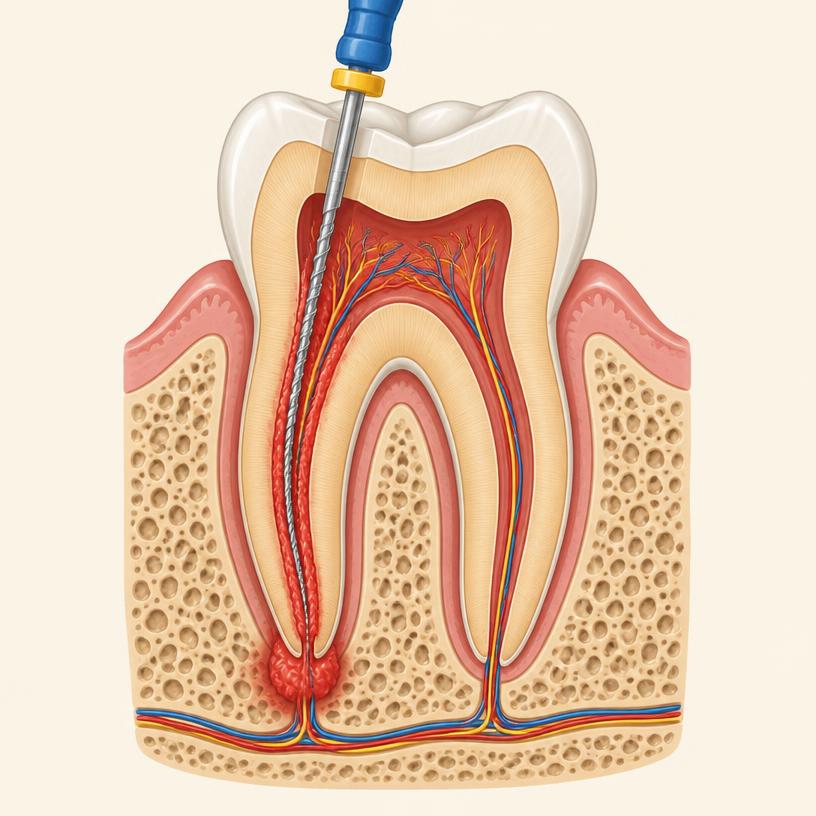
A root canal treats infection or inflammation inside the tooth. The dentist removes the affected pulp, disinfects the canals, and seals the tooth so it can be kept rather than extracted.
Draft guide — written with AI assistance and pending review by a licensed dental professional. It is general information, not dental advice.
Who it's for
People with deep decay reaching the nerve, a cracked tooth, or an abscess. Symptoms can include lingering pain to hot or cold, pain when biting, or swelling.
How it goes
- 1X-rays and testing confirm the diagnosis
- 2The tooth is numbed and isolated with a rubber dam
- 3The pulp is removed and the canals are cleaned and shaped
- 4The canals are filled and sealed
- 5A crown is usually recommended afterward to protect the tooth
Recovery: Most people return to normal activity the same day. Tenderness when biting for a few days is normal and usually managed with over-the-counter pain relief.
What's included?
A treatment total is usually several line items added together. This is why two quotes for “the same” treatment can differ. Not every component below is required for every patient — your plan should list only what your case needs.
Exam and X-rays D0140
Always part of this treatmentProblem-focused exam and images to confirm the diagnosis.
Root canal — molar D3330
Always part of this treatmentThe procedure itself on a back tooth. Front teeth (D3310) and premolars (D3320) are usually less expensive.
Core buildup D2950
Commonly includedRebuilding missing tooth structure so the crown has something to hold.
Crown D2740
Commonly includedA cap placed afterward to protect the treated tooth from fracture. Strongly recommended for back teeth.
Why prices differ
- Front tooth, premolar or molar (number of canals)
- General dentist vs. endodontist
- Whether a crown and buildup are needed afterwards
Questions to ask your dentist
- “Does the quote include the buildup and crown that usually follow?”
- “Will you do it, or refer me to an endodontist?”
- “What happens if I wait?”
Insurance tips
Often covered at 50–80% depending on plan. The crown afterwards is usually a separate major-service claim that counts against your annual maximum.